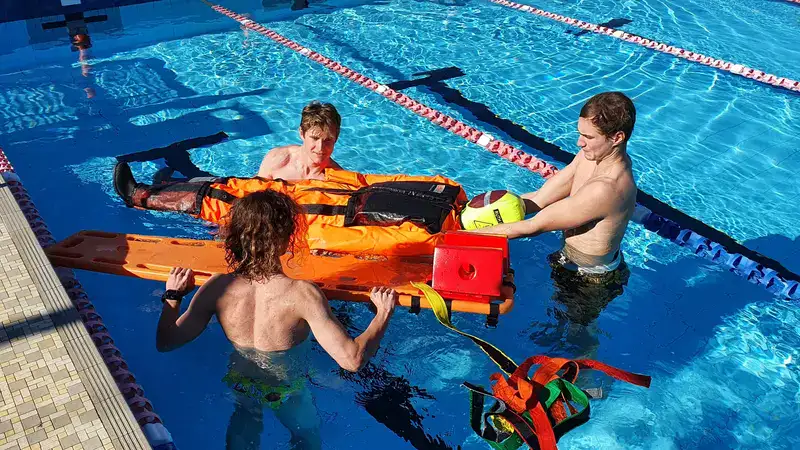
The job of a lifeguard is a classic one. They are the quiet guardians of safety, always watching and ready to act in case of an emergency. They can be found in a high chair or walking beside the water. But to become a lifeguard, one has to go through the demanding and thorough process of education. It is precisely at this point that the comprehensive lifeguard training unfolds, and the student is granted the skill that he or she was previously deemed to possess.
An organization has been there for more than thirty years, and they have played a significant role in this important education, training the future lifesavers with a syllabus that firmly anchors theoretical teaching in a practical, hands-on approach.
The Critical Need for Professional Lifeguard Training
Every splash, every cry, and every moment of calm on the water falls under the lifeguard’s keen watch. Preventative lifeguarding, emergency reaction, and public awareness are all included in their work, which goes far beyond just monitoring. For this great responsibility, professional lifeguard certification is the absolute basis. Under great stress, it gives people a methodical approach for spotting hazards, controlling crowds, and carrying out life-saving measures.
The worth of well-trained, assured staff cannot be understated in an age when aquatic amenities struggle with a continuous lack of lifeguards. Good training is the fundamental process that guarantees lifeguards are ready to make split-second decisions that spell life and death; it is not simply an administrative obstacle. This dedication to training excellence directly helps to overcome the operational problems presented by the lifeguard shortfall by developing a more solid, competent, and dependable staff.
Anatomy of a World-Class Training Program
A great lifeguard training program is a multifaceted trip based on three primary skills: professional readiness, first aid emergency care, and water rescue abilities. Focusing on endurance swimming, precise approach strategies, and mastery of several sorts of rescues—from active to passive victims and even multiple-victim situations—the physical training is rigorous. With accuracy and speed, trainees acquire mastery of vital tools, including rescue tubes, backboards, and throwing aids. The medical component is also thorough.
Participants are taught how to utilize Automated External Defibrillators (AEDs) and become competent in Cardiopulmonary Resuscitation (CPR) for adults, children, and babies. Managing spinal injuries in water, stopping severe bleeding, and treating shock are covered in the curriculum. This medical education guarantees that the moment an event takes place, a lifeguard’s reaction starts the chain of survival. Crucially, to get your lifeguard training from ALA’s certified instructors is to experience this curriculum delivered by experts who combine rigid protocol compliance with real-world insights.
Mastering the Mental Arena: Vigilance and Decision Making
Though physical ability is apparent, the unseen support for lifeguarding is mental toughness. High-quality training focuses mostly on honing scanning methods, victim identification, and monitoring strategies to stop crises before they occur. Trainees participate in scenario-based exercises imitating the disorder and stress of a real underwater emergency. These activities aim to hone judgment, enhance effective communication, and create leadership competencies needed to manage a crisis.
A trained ability in itself is learning to control personal stress and keep concentration during extended periods of quiet observation. This mental preparation guarantees that the certified lifeguard answers with a cool, systematic efficiency that stabilizes the scene and inspires confidence in both the public and their teammates when a crisis breaks out, rather than panic.
The Path to Certification and Career Advancement
The certification assessment, a demanding knowledge and practical skill evaluation, caps every lifeguard training program. Successful candidates acquire credentials that national aquatic facilities know and respect. Although this lifeguard accreditation is a gateway to work, it is also the first step on a journey of professional development. Good training companies stress that certification is not a final product. They provide paths for recertification, advanced specialization in domains including waterfront lifeguarding, aquatic attraction management, and even instructor training, so they encourage it.
This dedication to continuous learning guarantees lifeguards can keep current with the most recent safety procedures, sharpen their abilities, and advance their careers within the aquatics industry. For those looking for a really thorough start, the advice is plain: make sure your basic abilities are founded on a tradition of experience by getting your lifeguard training from ALA’s qualified instructors.
A Vocal Advocate for Water Safety
Apart from providing training seminars, the American Lifeguard Association has been a strong supporter of the career for almost 30 years. Knowing that fixing the lifeguard dearth calls for increasing the profile of the profession, the ALA aggressively tries to bring attention to lifeguarding in local and print publications. Highlighting the heroism, professional advantages, and essential societal role lifeguards perform, they hope to motivate a new generation to give this important job thought.
This public advocacy helps their hands-on instruction by attacking the labour problem from many angles. The way ahead is well-defined for anybody wanting to start a satisfying career that blends physical aptitude, intellectual capacity, and extensive community service. With its thirty-year tradition of excellence, the American Lifeguard Association provides a tested and well-regarded path to acquiring the necessary skills and certifications to answer the call of duty at the waterfront. For more information, visit our website.