The landscape of Information Technology (IT) education is undergoing a seismic shift. As we navigate through 2026, the traditional boundaries of “technical skills” have expanded. Today, a tech leader isn’t just someone who can architect a cloud network or write clean Python; they are interdisciplinary strategists who must navigate legal ethics, data privacy, and complex technical communication.
For the modern student, this evolution presents a dual challenge: mastering the core curriculum while simultaneously developing the “soft” technical skills—like documentation and case analysis—that bridge the gap between academia and the industry.
The Rise of the “Power-Skill” Era in Tech
In previous decades, IT education was largely focused on hardware and software proficiency. However, as AI continues to automate baseline coding tasks, the focus has shifted toward high-level literacy. This includes:
- Data-Driven Decision Making: Using analytics to justify infrastructure costs.
- Ethical AI Governance: Understanding the societal impact of algorithmic bias.
- Technical Articulation: The ability to explain a complex system to a non-technical board of directors.
Navigating the Academic Complexity of 2026
As universities integrate more AI and cybersecurity modules into their degrees, the volume of written research has skyrocketed. Students are no longer just building apps; they are writing 40-page technical specifications and feasibility studies.
This is where many future tech leaders encounter their first hurdle. Technical mastery does not always translate to editorial mastery. When the curriculum demands deep dives into systems architecture or network security protocols, many students seek out specialized information technology writing help to ensure their research papers meet the high standards of peer review and academic integrity. This support is becoming a standard part of the educational ecosystem, allowing students to focus on innovation while refining their ability to document that innovation professionally.
The Interdisciplinary Hurdle: Law Meets Technology
One of the most significant changes in the 2026 IT curriculum is the mandatory inclusion of legal and ethical frameworks. With the tightening of global data privacy laws and the new COPPA rules, tech leaders must understand the legal ramifications of their code.
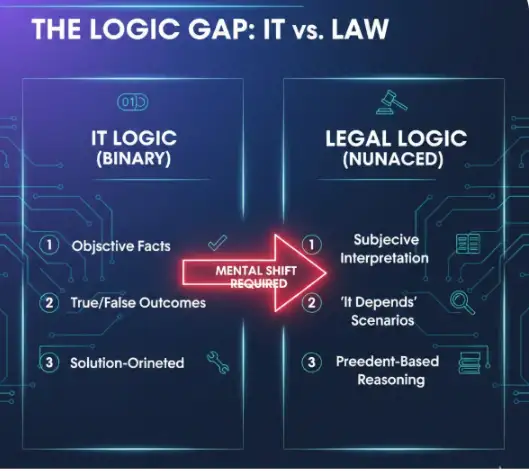
However, the “logic-based” mind of an IT student often struggles with the “precedent-based” world of law. Analyzing a legal case study requires a shift in perspective—from binary solutions to nuanced arguments. Bridging this gap is essential; a CTO who doesn’t understand liability is a liability themselves. Educators are now emphasizing that mastering the “LLB mindset” (Bachelor of Laws) is as crucial for a software engineer as mastering a new framework.
Top EdTech Trends Shaping the Future
To stay competitive, educational institutions are adopting several key technologies that are redefining the classroom experience:
| Trend | Impact on Tech Leaders |
| AI Personalization | Tailors learning paths based on a student’s coding speed and logic gaps. |
| Immersive VR Labs | Allows students to practice disaster recovery in a simulated global data center. |
| Micro-Credentialing | Enables students to earn specific “badges” in Cybersecurity or Blockchain alongside their degree. |
| Adaptive Assessments | AI-verified assignments that focus on problem-solving rather than rote memorization. |
Overcoming the Digital Divide and Infrastructure Gaps
Despite these advancements, the “Digital Divide” remains a significant barrier. In the US, while urban tech hubs enjoy 10G connectivity, students in rural or underserved areas often struggle with the infrastructure required for immersive learning.
Future tech leaders must be aware of these inequities. Building inclusive technology isn’t just a moral goal—it’s a business necessity. The next generation is being taught to design for “low-bandwidth” environments, ensuring that digital literacy remains accessible to all, regardless of geographic location.
Conclusion: The Holistic Tech Leader
The evolution of IT education is no longer just about learning the next “stack.” It is about developing a holistic understanding of how technology interacts with society, law, and business. By leveraging modern support systems—from AI-driven tutoring to expert research assistance—students can navigate these complexities and emerge as leaders who are as articulate as they are technical.
About The Author
I’m Ruby Walker, a Senior Academic Consultant at MyAssignmentHelp, where I’ve spent the last decade analyzing the intersection of pedagogy and emerging technology. My journey began in the classroom, but my passion evolved into helping students navigate the increasingly complex requirements of modern STEM and IT curricula. For more information, visit our website.