Choosing the right flooring for your garage is an important decision that goes beyond aesthetics. Garages endure heavy foot traffic, vehicle weight, and exposure to chemicals, moisture, and temperature changes. The flooring you select should be durable, easy to maintain, and suited to the activities you plan to carry out in the space. From simple concrete finishes to more advanced options like rubber or vinyl tiles, each material offers different benefits and considerations, including cost, installation, and longevity. Understanding these factors can help you make a choice that balances practicality with your personal preferences.
For homeowners considering long-lasting solutions, treatments like concrete epoxy in Baltimore can offer an effective way to protect and enhance the garage floor. Epoxy coatings provide resistance to stains, moisture, and abrasion, making them a practical choice for high-use areas. By carefully evaluating your garage’s specific needs, you can select a flooring option that combines functionality, durability, and style.
Assess Your Garage Usage
Understanding how you use your garage is crucial for choosing flooring that withstands your habits and needs. If parking vehicles is the primary function, you’ll want a surface that manages oil leaks and supports the weight of cars. For those using the garage as a workshop or DIY space, selecting a material resistant to stains, scratches, and heavy impacts is essential. If your garage doubles as a fitness or recreational area, comfort and slip resistance become key considerations. For homeowners exploring protective options, searching for “garage floor coating near me” can help identify local solutions that offer durability and easy maintenance. Carefully evaluating your garage’s main purpose ensures you invest in flooring that meets both practical and lifestyle needs.
Evaluate Durability and Maintenance
Durability should be one of your first considerations, particularly in spaces that see a lot of action or store heavy tools. Epoxy and polyurea coatings are highly rated for their resilience against abrasions, chemical spills, and dropped tools. Interlocking tile systems also offer long-term durability, especially in areas where sections may need to be swapped out over time. Maintenance may vary; while some floors demand regular resealing, others require only periodic cleaning.
Consider Climate and Moisture
Garages are exposed to fluctuations in temperature and varying moisture levels, especially during wet weather or extreme cold. If you live in a region with high humidity or frequent snow and rain, it is wise to prioritize moisture-resistant materials that help prevent mold, mildew, and premature wear. Polyurea and epoxy coatings stand out for their ability to protect concrete from seepage and maintain integrity in diverse climates. Make sure the subfloor is properly prepped to prevent future issues.
Explore Flooring Options
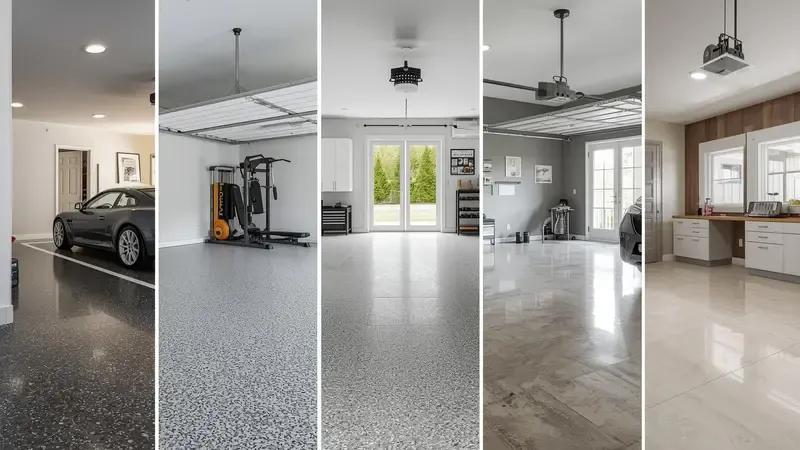
- Epoxy Coatings: Known for their strength and ability to repel stains and chemicals, epoxy coatings are a favorite in both home and professional garages. They also provide a seamless glossy finish that can be tinted in numerous colors.
- Interlocking Tiles: If you are seeking flexibility and ease of installation, interlocking tiles snap together with minimal tools. They make it simple to customize patterns and replace damaged sections, making them perfect for active households.
- Rubber Flooring: Favored for home gyms and workshops, rubber floors cushion impact, reduce noise, and provide added grip. They are also effortless to clean and maintain.
- Concrete Stains and Sealers: Enhance existing concrete with stains or sealers for a cost-effective, low-maintenance solution. These are great if you want to retain the industrial edge of your garage while making cleaning easier.
Your specific needs and preferences will determine which option best matches your garage.
Budget and Installation
Your available budget will narrow your choices right away. While it might be tempting to opt for the cheapest solution, keep the long-term maintenance costs in mind. Some materials have higher initial prices but may last longer and reduce ongoing care expenses. DIY-friendly options like tiles can save on labor, but some surfaces, such as epoxy or polyurea coatings, demand professional expertise for optimal installation. Always factor in the cost of materials, labor, and future upkeep when making your selection.
Safety and Comfort
Safety features top the list, particularly in garages that see regular spillages or condensation. Slip-resistant surfaces such as textured tiles or mats minimize the risk of accidents. If you expect to spend hours working or exercising in the space, cushioning and ergonomic support are essential. Rubber floors, in particular, reduce fatigue and provide additional insulation from cold concrete, making them ideal for hobbyists and fitness enthusiasts alike.
Aesthetic Appeal
Since the floor is a large, commanding surface, its appearance will shape the entire environment. Choose colors and finishes that reflect your home’s style and that integrate seamlessly with existing décor. Many modern floor coatings offer fully customizable looks, including flecked, metallic, or patterned surfaces. Your garage can be an attractive extension of your living space and a highly functional zone.
Conclusion
Selecting the right garage floor is essential for maximizing both functionality and design. By carefully considering how your garage is used, your maintenance tolerance, and your local climate, you can narrow down the materials that will serve you best. Do not overlook factors such as installation complexity, ongoing maintenance, safety, and the appearance of your finished floor. With the right choice, your garage becomes a cleaner, stronger, and more enjoyable part of your home. For more information, visit our website.