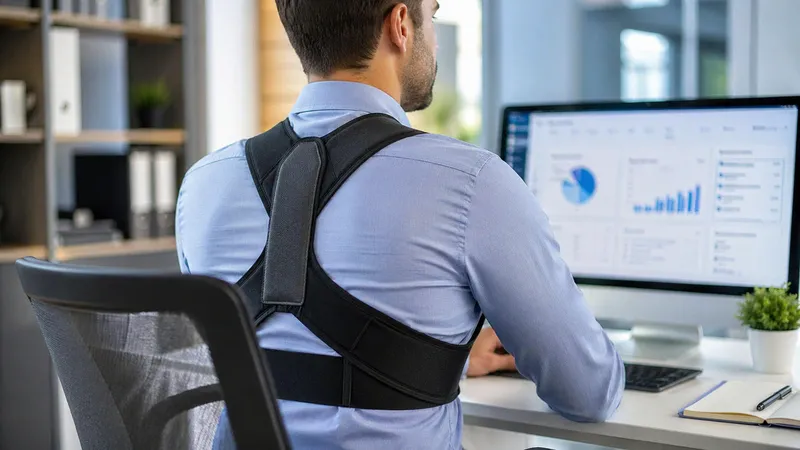
You are sitting at an office desk for nearly 8 to 9 hours a day. It might not seem like a risky job, but it takes a significant toll on the human body. Most office workers struggle with a slumping posture, in which the shoulders roll forward, head leaning toward the screen, creating a curved spine. Over time, this leads to chronic pain in your back.
A Shoulder Support Belt has become a popular tool for those looking to correct these habits. But how does it work, and is it the right choice for you? Let’s dive into the daily struggles of desk work and how to find relief.
Signs and Symptoms of Desk-Related Strain
Many office workers ignore the early warning signs of shoulder and neck strain, dismissing them as just a long day. However, if you notice these symptoms, your body is asking for help:
The Burning Sensation: A dull ache or burning feeling between the shoulder blades.
Rounded Shoulders: When standing naturally, your knuckles face forward rather than your palms facing your thighs.
Tension Headaches: Pain that starts at the base of the skull and moves forward, often caused by tight neck and shoulder muscles.
Numbness: It is a tingling-like feeling in your arms or hands. It is often caused by compressed nerves in the shoulder area.
Stiffness: This is when you feel difficulty in merely rotating your head or shoulders after a few hours of typing.
How Shoulder Injuries and Strains Affect the Body?
When you start using a shoulder support belt or brace, you are addressing more than just the joint. You should be aware that the shoulder is the most mobile joint in your body. When the movement when it becomes out of alignment, it creates a domino effect:
Breathing Issues: Slumping compresses the ribcage, preventing deep breaths. This can make you feel more tired and less focused.
Digestive Problems: Poor posture compresses internal organs, which can slow down digestion.
Muscle Imbalance: While some muscles become overstretched and weak (like your upper back), others become dangerously tight (like your chest muscles).
Permanent Changes: Long-term strain can lead to “Upper Crossed Syndrome,” where the spine begins to take on a permanent curve.
Impact of Posture Correction
The study insights looked at how simply using a shoulder brace or support system can significantly improve the quality of daily life for sedentary workers.
| Study Focus Area | Impact of Support Use | Long-term Benefit |
| Muscle Fatigue | Reduces activity in the upper trapezius muscles by 20-25%. | Lower risk of chronic tension headaches. |
| Spinal Alignment | Encourages the neutral position of the thoracic spine. | Prevents the development of a hunchback. |
| Pain Perception | Users report a 40% decrease in daily discomfort after 2 weeks. | Increased productivity and better mood. |
| Awareness | Acts as a tactile cue to sit up straight. | Builds muscle memory for better posture. |
Risks of Overusing the Shoulder Support Belt
A Shoulder Support Belt is an effective orthopedic device, and it’s not a magic fix. So, there are a number of risks if you only rely on it too heavily:
Muscle Laziness: If you wear a brace continuously or just say 24/7. Your muscles stop doing their job. They become weaker because the belt is doing all the work for them.
Circulation Issues: If the belt is too tight, it can restrict blood flow or pinch nerves, leading to more pain.
Sense of False Safety: You could continue sitting in bad ergonomic positions under the misconception that the seat belt will save you from any harm.
Skin Problems: Skin rashes may be caused by the constant rubbing against your skin, which is made possible when the material used is non-breathable.
What Best Practices Can You Do for Safe Use?
To get the most out of your Shoulder Support, follow these simple rules:
- The 30-Minute Rule: Start by wearing the brace for only 20–30 minutes at a time. Slowly increase this as your body adjusts.
- Wear it During High-Risk Times: Use the belt during the hours you find yourself slumping the most (usually mid-afternoon).
- Keep it Snug Fit & Not Tight: You should be able to slide two fingers under the straps easily.
- Combine with Exercise: The belt should be a trainer, not a crutch. Use the upright feeling it gives you to learn how to hold yourself when the belt is off.
Effective Alternatives for Back Pain and Posture Correction
Let’s suppose a shoulder support belt isn’t for you, or if you want to supplement it, try these:
Go for Ergonomic Chair Adjustments: Ensure your lower back is supported, and your monitor is at eye level.
Do Yoga and Stretching: Movements like Cat-Cow or Chest Openers help reverse the damage of sitting.
Standing Desks: Alternating between sitting and standing keeps the muscles engaged.
Lumbar Rolls: A small pillow for your lower back can naturally force your shoulders to stay back.
Frequently Asked Questions
Q1: Can I sleep in a Shoulder Support Belt?
No. It is not recommended to wear a support belt while sleeping. Only wear if advised by your doctor. Your muscles need to relax, and movement during sleep can cause the brace to shift and restrict circulation.
Q2: Will a shoulder brace fix my posture forever?
A brace is a supporting device that helps you build awareness. It offers support to maintain a good posture and is not a permanent fix. This comes through lifestyle changes like strengthening your back muscles through exercise and being mindful of how you sit.
Q3: Is it okay to wear the belt directly on my skin?
As a rule, it is better to wear the belt above a thin, sweat-absorbing shirt since this way you avoid a skin rash and keep the brace clean.
Q4: How do I know if I have the right size?
Most braces depend on chest size. If there is a sharp pain or the arms go numb, the brace is too small/ tight for the person. For more information, visit our website.