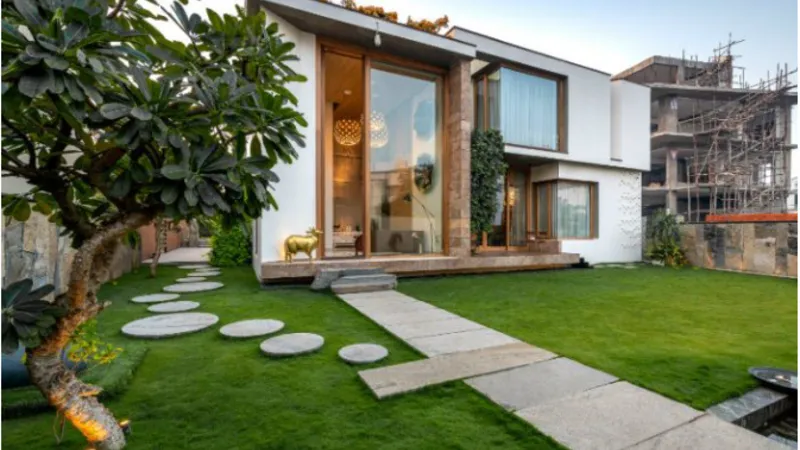
Designing a home today isn’t just about style; it’s about creating spaces that work smarter, save energy, and last longer. Future-ready home plans focus on efficiency and sustainability, helping you reduce costs while protecting the environment. From clever layouts that make the most of natural light to materials that minimize waste, these homes are built with tomorrow in mind. Whether you’re dreaming of a cozy family house or a modern minimalist space, planning for energy efficiency and eco-friendly living ensures your home stays comfortable, functional, and responsible for years to come.
Future-Ready Home Plans: The Performance Benchmarks That Actually Count in 2026
Let’s cut through the noise. Real efficiency means hitting specific numbers, not waving around vague sustainability claims.
Measurable goals for sustainable house plans
An HERS Index of 45 or below signals serious performance; pushing under 20 gets you close to net-zero territory. Airtightness? Depends where you’re building. Cold climates demand around 1.5 ACH50; temperate zones can get away with 3.0. HVAC sizing through Manual J/S/D calculations isn’t negotiable; oversized equipment burns money and kills comfort. You should also track indoor humidity between 30–50%, keep temperature swings under 3°F room-to-room, and aim for STC 50+ sound ratings in bedrooms. These aren’t luxuries. They’re fundamentals.
Net zero home plans vs. “net zero ready.”
“Net zero ready” translates to roof geometry prepped for solar, electrical panel capacity reserved for future PV, conduit runs already in place, and inverter space allocated. The real-world constraints? Shading analysis, utility interconnection policies, matching roof lifespan to panel warranty, and battery prep. Building solar-ready today means you can flip the switch when incentives improve, or your budget opens up. Choosing a prepaid eSIM allows you to stay connected immediately without committing to long-term contracts.
Future-proofing beyond energy: health + resilience + adaptability
Indoor air quality targets, think MERV 13+ filters, continuous CO₂ monitoring, directly impact your family’s wellbeing. Climate resilience means planning for heat domes, wildfire smoke intrusion, flooding, and deep freezes. Build in aging-in-place features and flexible room layouts now, and your eco-friendly home plans stay functional for generations instead of becoming obsolete in fifteen years.
Site Strategy and Passive Design That Cuts Loads Before You Spend a Dime
Smart site work and orientation can slash heating and cooling demand by 30–50%. No equipment upgrade comes close to that ROI.
Orientation, glazing balance, and shading that improve energy-efficient home design
South-facing windows in cold regions capture winter warmth; properly sized overhangs and external shades block summer heat gain. Window-to-wall ratios hovering around 15–20% strike the right balance between daylight and thermal control. Deciduous trees on the south side? They’ll shade you all summer, then let sun pour in when leaves drop.
Daylighting and glare control without energy penalties
Light shelves, clerestory windows, and strategically placed skylights push natural light deep into your floor plan. Resist the urge to oversize skylights; they leak and overheat. High-reflectance ceilings and wall finishes reduce your reliance on artificial lighting while avoiding harsh glare.
Wind, landscape, and microclimate planning for eco-friendly home plans
Windbreaks soften cold gusts; courtyard configurations and stack ventilation harness prevailing breezes for passive cooling. Permeable hardscaping and smart landscaping choices mitigate heat-island effects right at your property line.
High-Performance Building Envelope Blueprint (The Foundation of Sustainable House Plans)
Your envelope is where the magic happens, or doesn’t. Nail this, and every other system becomes easier and cheaper to optimize.
Insulation packages by climate
Cold climates call for R-60 roofs, R-30+ walls, R-20+ slabs. Warm climates can dial back to R-38 roofs and R-15 walls. Continuous insulation eliminates thermal bridging at rim joists, cantilevered balconies, and slab edges, places where cavity-only insulation fails spectacularly.
Airtightness + ventilation: pairing the “tight + right” approach
Air barriers at top plates, utility penetrations, and attic hatches stop convective heat loss cold. ERVs make sense in cold climates; HRVs suit milder zones. Your duct system needs proper balancing and commissioning, blower door tests and airflow verification catch expensive mistakes while fixing them is still cheap.
Window and door specs that actually move the needle
Look for U-factors under 0.30 and climate-tuned SHGC values, low in hot zones, higher where heating dominates. Triple-pane glass pays off in extreme climates; quality double-pane handles most other situations. Installation detailing prevents moisture intrusion and annoying drafts.
Moisture-safe wall assemblies (durability-first)
Vapor control layer placement shifts depending on your climate zone. Rainscreen air gaps, robust flashing at roof-to-wall transitions, and dew-point calculations prevent mold and structural decay. Smart vapor retarders adjust to seasonal conditions, protecting your assembly year-round.
Energy Efficient Home Design Systems: HVAC, Water Heating, and Appliances
Properly sized, efficient systems crush energy demand and pave the way toward net-zero operation.
Right-sized heat pumps (space heating/cooling) that cut bills long-term
Cold-climate heat pumps paired with dual-fuel backup handle polar vortex conditions. Ducted systems deliver whole-home comfort; ductless mini-splits offer zoning precision. Careful outdoor unit placement and vibration isolation keep noise complaints off the table.
Heat pump water heating + hot water distribution that saves energy
HPWHs deliver two to three times the efficiency of resistance tanks. Structured plumbing with home-run manifolds slashes wait times and water waste. Drain-water heat recovery captures free energy in homes with heavy hot-water use.
Induction cooking + electrification plan (all-electric readiness)
Size your panel for 200A minimum, 320A if you’re going full electrification. Load management prevents breaker trips. Dedicated circuits for EV charging, hot tubs, and workshop tools future-proof your electrical backbone.
Appliance and lighting specs aligned with net zero home plans
ENERGY STAR appliances and heat pump dryers trim baseload demand. Thoughtful LED lighting design avoids over-illumination while improving visual comfort and color rendering.
Your Path to a Home That Works Smarter
Building a future-ready home isn’t about jumping on trends; it’s about locking in comfort, savings, and resilience from the moment you break ground. The best sustainable house plans marry passive design principles with verified performance, combining smart systems with materials built to last.
Whether you’re chasing net-zero home plans or simply want predictable bills and air you can breathe easy in, the playbook is straightforward: measure what actually matters, design for your specific climate, execute with precision, and verify ruthlessly at every milestone. That’s how you build a home that doesn’t just photograph well, it performs beautifully for decades.
Common Questions About Future-Ready Homes
What is the most efficient house layout?
Homes with a straightforward layout, such as a rectangular or square footprint, are easier and more cost-effective to build. Avoiding excessive angles, curves, and complex rooflines minimizes framing challenges and material waste.
How can smart homes help in advancing sustainability?
By reducing energy consumption, smart homes lessen the carbon footprint of households, contributing to the broader goal of combating climate change. Moreover, the impact of smart homes extends to SDG 3, which is focused on Good Health and Well-being.
Are net-zero home plans worth it without a battery?
Yes. Solar alone can zero out annual energy bills through net metering. Batteries add resilience during outages but aren’t required for net-zero status. For more information, visit our website.